The chemist's war 2016-09-07
The Chemist's war: how the U.S. government deliberately poisoned alcohol during Prohibition.
tagged as
The Chemist's war: how the U.S. government deliberately poisoned alcohol during Prohibition.
Wreck of HMS Tarpon found : Royal Navy submarine sunk in 1940 with a loss of at least 50 souls.
And just like that we're back. What happened cms?
It was never entirely my intention to go offline for such an extended hiatus. Even though the web is intrinsically brittle and ephemeral, I like to do my bit to keep my little backwater serving 200 OK s to the half-dozen people who stop by to check in regularly, and the couple of dozen who linked to something I put up at some point. It's basic web-citizenship as far as I'm concerned.
Before we went fully dark, I'd not posted for a long time already . And before that I'd slowed my posting down to something of a crawl. I think there's a few reasons for that. It's easy to get bored with blogging for the sake of blogging, especially in our current age where everyone shares profligately across many social platforms . It's fairly common to see blogs that have fallen into a recursion of no posts for months, then a post apologising about that, and then further disuse. I don't think this is one of those, but the proof is in the posting I suppose.
There's certainly been less time in real life for auxilliary pursuits like online rambling, and that's a big part of the reason. No time for any proper content posts, concomitant with a surge of alternative social platforms to play around with, meant it often seemed a bit redundant to post arrays of short-links , when I could just throw them up on twitter / adn / diaspora* / flickr / ello / imzy /whatever, with a bigger audience, and more interaction.
I was also feeling a bit self-conscious about standing up in public. After leaving last.fm (fairly amicably, as these things go, fwiw, albeit with a slightly battered heart), which felt like a fairly visible shift sideways, I was quite deliberately courting more obscure, maybe more unexpected job roles, and I remember feeling like I really didn't want to bare my thoughts to the internet judgement machine whilst I wasn't even entirely sure what I was doing myself a good deal of the time. Also busy! Young family plus startups really left little time for anything much else.
I also was really feeling the pain of Wordpress . I never quite managed to find an authoring approach to use with it that didn't make writing anything seem like far harder work than it ought to be, also because I always insist on self-hosting, the sheer weight of it for maintainence and security updates, and backups, and DBA -ing, and having to write PHP or perhaps even plugins to do the inevitable customisations someone like myself inevitably finds themselves suckered into doing. So Wordpress was a drag, which was feeding my reluctance to contribute much of substance. So I decided to pause on updating whilst, in true wannabe-hacker style, I whipped together some kind of alternative content publishing system.
I'll just take a paragraph out to stress that I actually admire WordPress a great deal. It's a very sophisticated and flexible web platform, and a great choice for site management, in either managed or self-hosted configuration. It kept this site ticking along for years. It just isn't a particularly good fit for my requirements, which are extremely simple
I thought about using another off-the-shelf blogging system, which would have been the sensible route, but I figured that would just lead to a similar frustrated stalemate. So I started to sketch out an application that would allow me to quickly fling out tagged and dated content without much overhead of hosting or writing. And I carried on intermittantly piecing this app together, often on trains, for a couple of years. As an exercise in procrastination, it worked out better than I expected, and I carried on posting short content to twitter and others, reasonably happy to continue to defer the responsibility.
But then the site went dark. I was hosting it all on a linode instance. I've been a very enthusiastic linode user for perhaps ten or more years, I think they have an excellent product, offering well-provisioned VPS instances , inexpensively, with an easy to use management site. Generally I've been very happy with them to date.
This changed somewhat last year, and my confidence deflated a little. There was an extended outage of service across linode in December 2015 , apparently as a result of a targetted DDOS . This lasted for many days, and the communications about it from linode were muted and suspiciously vague. This isn't really what I expect from a first-tier ISP. I came away with the impressions that there were some significant architectural problems with their infrastructure, probably from acrued technical debt , and potentially some exploitable vulnerabilities in their public facing application software . I decided it was time for a change.
I did some reasearch and rented a couple of new hosts. This time I've gone for low end, physical servers. This represented another procrastination opportunity, because when I originally set up the beatworm.co.uk linodes, almost ten years ago, I just hand configured everything by remote shell. Now I like to use the ansible configuration management system to set up hosts, and I took this opportunity to port my public infrastructure across to use repeatable playbooks. This turned into another major yak-shave , because there was slightly more to it than just a WordPress deployment, I was hosting mail, calendars, media streaming, IM, DNS, the works. After getting lost in this tarpit for a couple of months, I decided to move the application tier over to use the playbooks from the sovereign project , which covers much of the same ground, but is already written, and uses more modern components. Of course it wasn't entirely straightforward to integrate these plays over my existing base provisioning, and I ran into a couple of glitches and gotchas with some of the choices they'd made for configuration, but it only took a couple of weekends worth of fiddling to get it all running in a fairly acceptable shape. I moved the DNS across, at which point the wordpress site was left behind, and everything went dark.
I was surprised at how much this bothered me.
I like an outlet for sharing things. I enjoy the idea of having a stable internet identity . I don't like the way the modern web has folded these ideas into a handful of consumer products run by just a couple of corporate gatekeepers. That's not the web I grew up with, and it's not the web I want to see either. A very loosely federated ecosystem of ad-hoc resources, all mixed together as hypermedia, aggregated and accessed via an assorted bag of user-agents. That's how it works best . I like to write, because I like the practice and discipline of working toward articulating my thoughts for a general reader.
I like being able to curate an archive, and keep control over how that information persists and is presented. This is hard enough to do when you have primary jurisdiction over the medium and material (there is plenty of bitrot on view in my archive, particularly in the really old material, which has been migrated across multiple publishing platforms now), and basically impossible if you're relying on a third party service, which periodically re-invents itself to better serve it's own objectives, which are only ever to be tangentally aligned with your own, at best.
I don't like the sense of obligation I get from formal social media platforms. There's a subliminal sense of pressure to perform, to update, to observe the conventions, to consider and measure the implied audience. I'm not a joiner by nature. I just end up gently resenting the throng. I like to feel like I have a voice, but I don't want, or even expect to reach, an automatically provided audience.
So, I picked back up my now-neglected website platform experiment, and knocked it together enough to get an MVP out of the door. It serves HTML over HTTP. It has a relatively minimal set of style rules that should allow it to work gracefully across various screen dimensions. It has rudimentary support for RSS ( not that many people use newsreaders any more ). It's simple to run in a staging environment, and I can write posts in plain text in emacs , and edit and post them without much extra grief. It's only got about 22% of the functionality I had originally planned, but I feel the urge to ship it, use it, and hopefully I'll refine it in production.
There's a couple of interesting quirks to this new hosting setup. It's an ARM -based micro-blade, hosted on a scaleways C1 . The blogging software is semi-static , in as much as it serves generated content from the filesystem. It's written in common lisp , and deployed in a different lisp to the one it's developed on There's no frameworks (aside from using zurb foundation classes to base the CSS). There's no database. There's no comments, because I haven't yet decided on a productive way to support them.
Apple Vs GPL : Apple's attitude to GPLv3 is making OS X an increasingly shonky UNIX developer system
Sodium Killers : A story combining serial killers and Industrial chemistry? The BBC know how to clickbait me.
30 Years On : BBC News has a nice summary commemorating the closure of Chatham Dockyards
There’s been a little flurry of le Carré activity in the British press this week , following on from release of MI5 archive files that indicate that an MI5 agent, known as Jack King ran a network of UK nazi collaborators during WWII. Highly fortunate timing for the British spooking establishment to garner some positive press, some might say. The last couple of months the news reports about them have mostly been about illegal mass surveillance techniques attempting to record and analyze all internet traffic at source , and creepy write ups of mass automated collation of private video chats . Some of them intended to be particularly private , no doubt.
Journalists had a bit of fun trying to retrospectively finger the real Jack King . The Telegraph decided King was probably John Bingham, Lord Clanmorris , whose name is usually mentioned in passing in press stories about ‘le Carré’, itself a pen-name for David Cornwell , who often mentions that Bingham is one of the component inspirations behind his super-famous fictional master spycatcher, George Smiley. The Telegraph also span off an article about Bingham’s sense of disapproval of his protégé's literary exploits . Mr Cornwell, writing under his given name, sent in a marvellously succinct letter by way of reply.
Bingham was of one generation, and I of another. Where Bingham believed that uncritical love of the Secret Services was synonymous with love of country, I came to believe that such love should be examined. And that, without such vigilance, our Secret Services could in certain circumstances become as much of a peril to our democracy as their supposed enemies.John Bingham may indeed have detested this notion. I equally detest the notion that our spies are uniformly immaculate, omniscient and beyond the vulgar criticism of those who not only pay for their existence, but on occasion are taken to war on the strength of concocted intelligence
Navigating around the little flurry of reportage about this little back and forth, I found this engrossing older Q&A with le Carré , from the Paris Review , held at the time of the US publication of “ The Tailor Of Panama ”, back in the late 1990s. It is a marvellous read, concerning the mechanics, circumstances and techniques of his fictional writing, and touches into politics. This quote leapt off the page at me.
My definition of a decent society is one that first of all takes care of its losers, and protects its weak.
Quite. He’s quite a writer, that Mr. le Carré. If all you know of his work are the mostly excellent TV and motion picture adaptations of his more famous works, you might do yourself a favour, and read a few of the source novels . They work best tackled in publication order.
Cast A Kitten : Nerts! This post on dead 1920s slang terms is postively Eel's Hips.
2013 ioccc winner - Largest Small System Emulator : I am delighted by this.
Blame The Daily Mail : Adam Curtis in wonderful form on the roots of MI5.
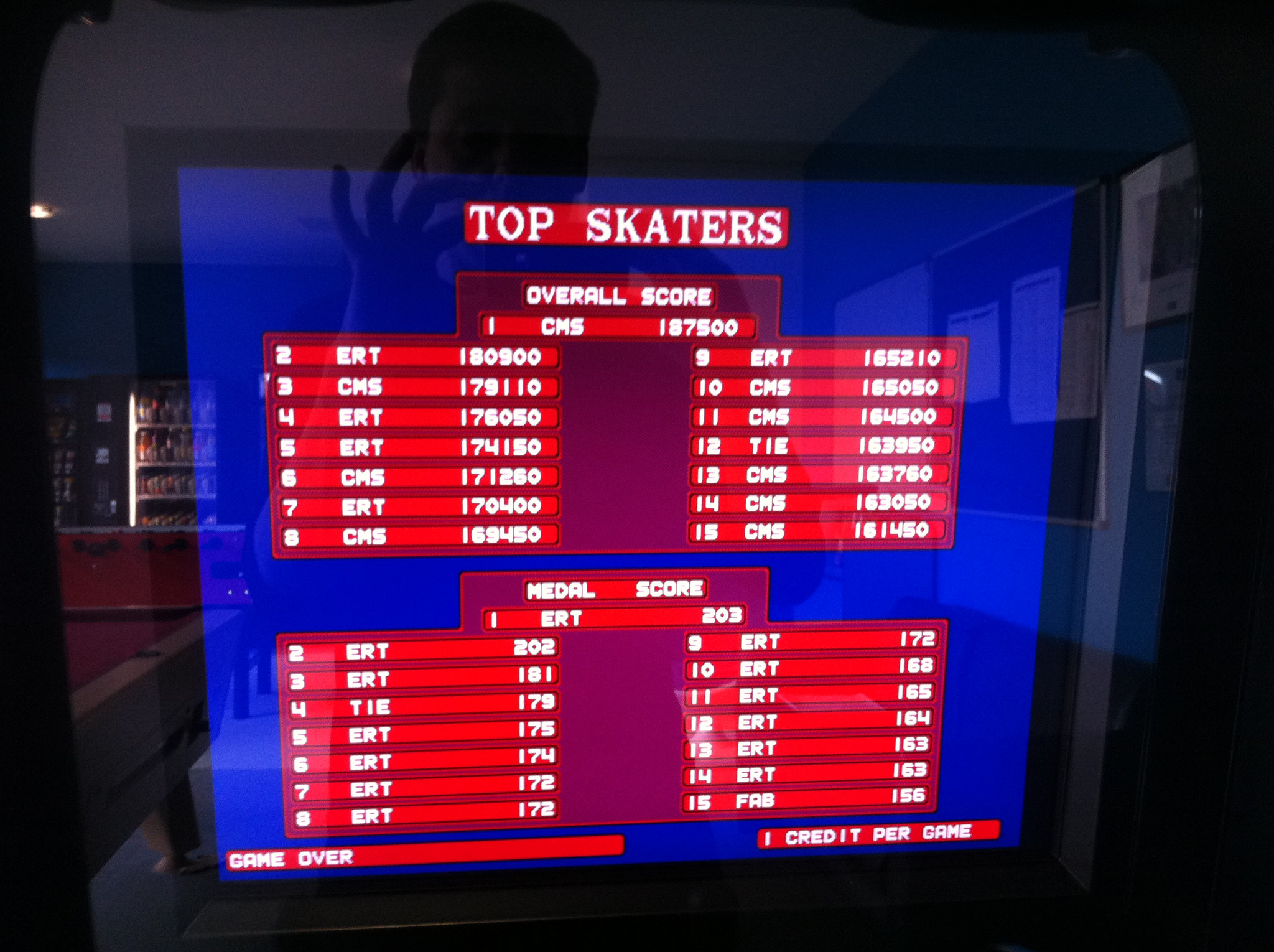
This is what my final day at last.fm looked like.
In the morning, this.
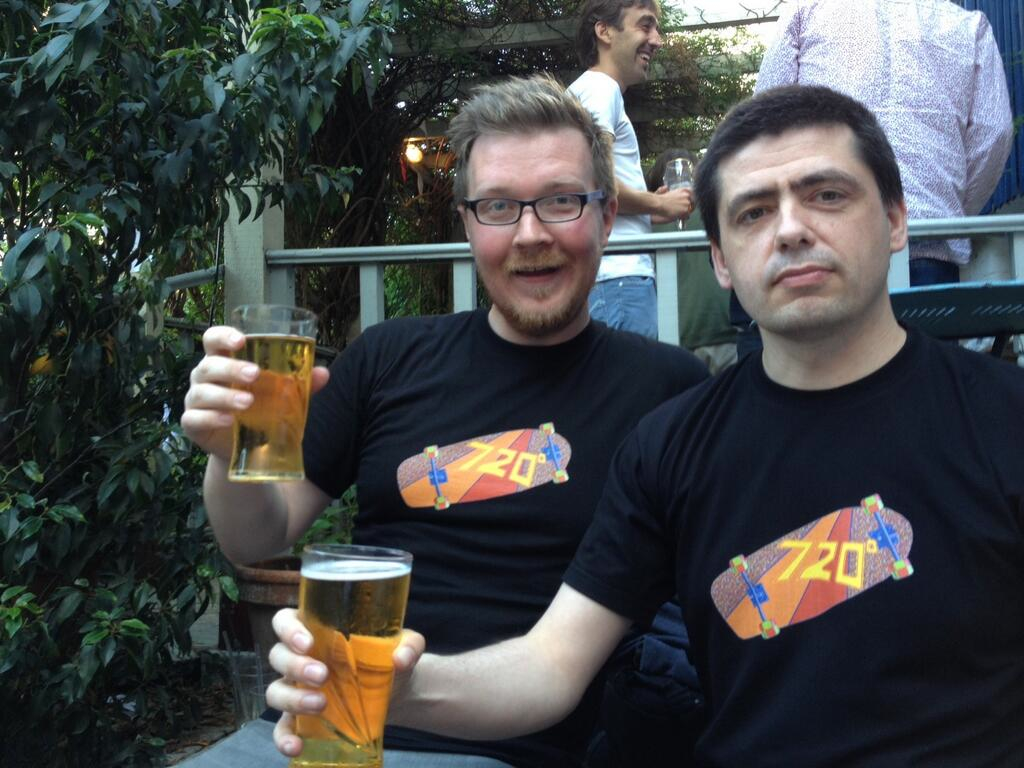
Yes, I'm working on getting a MAME cab smuggled into Moonfruit.
Enron Email Dataset : cleaned up, organised, and presented as part of the Internet Archives dataset collection.
This afternoon I went on a short guided tour of the decomissioned Royal Navy submarine, HMS Ocelot . It's in a dry-dock at the Royal Dockyards working museum at Chatham , just 20 minutes down the road from home.
Apologies for the poor quality of the photos. I only had my iPhone, with 15% remaining charge, and submarines do not offer much in the way of natural lightning.
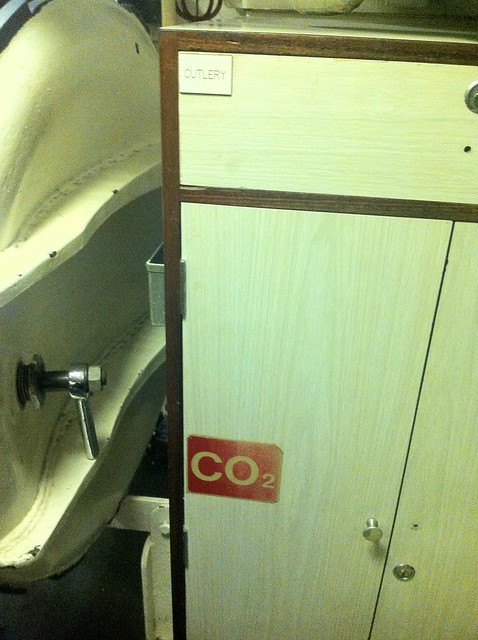
Despite having owned a year pass for the best part of a year, and frequently admired the Ocelot from the outside, this is the first time I've been aboard. The tour is short, cramped, and completely fascinating, although perhaps not for the squeamishly claustrophobic, and definitely not for the mobility impaired.
The Dockyards is a superb example of a modern lottery-assisted regeneration project. There's several large ships in dock you can wander around, huge warehouses full of boats and machinery to pore over, a ropery, an art gallery space, a working steam railway, several sub museums. Far more than you can do in a single visit, but your ticket, once purchased, is good for 12 months of repeat admission.
Original Sim : From Marvel Fanfare #25 (1986) - Dave Sim Marvel character portfolio. Yeah, me too.